云南 / YN_C5
云南 — 茶叶、商队与南方屋顶
宽阔的轮廓将区域变成充满活力的茶巡游。
已审核可发布 · 已查看图画并对当前文件进行技术检查
250 × 75 毫米 · 3840 × 1152 像素 · RGBA · 390.144 / 390.144 ppi
审核依据
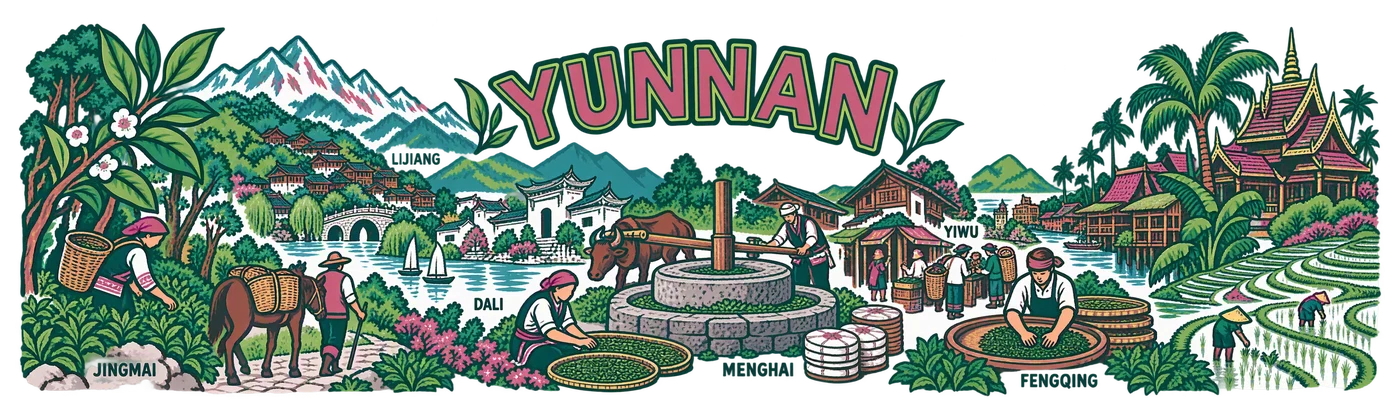
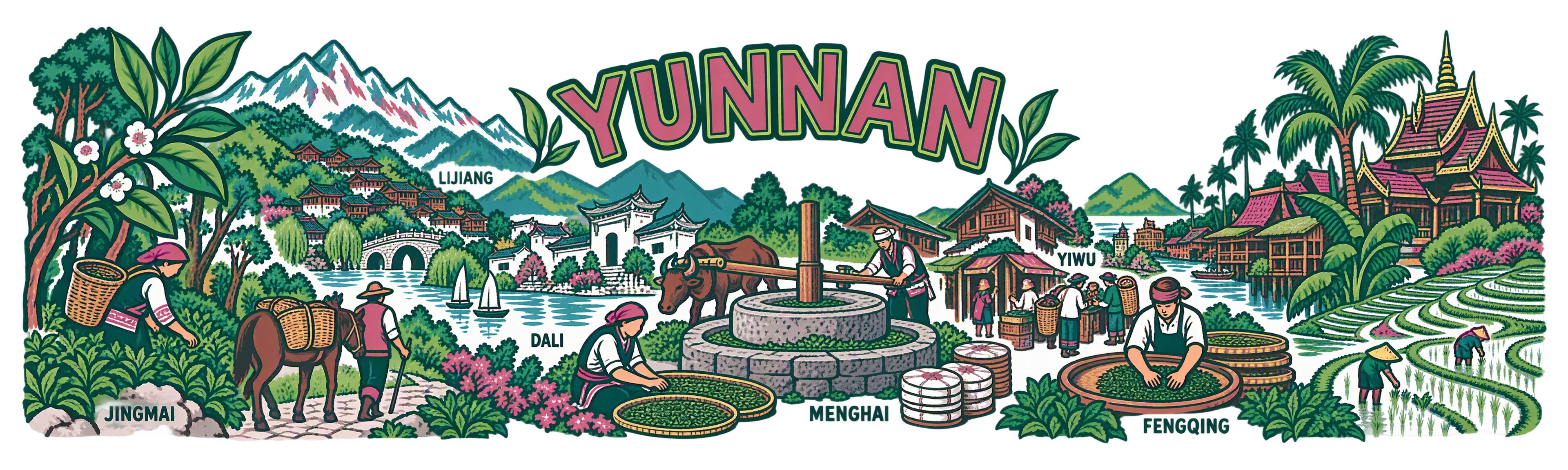
完整的 YUNNAN 双轮廓;明亮干净的图形,包含茶树、商队、茶叶干燥与加工。地区标注可读,大型场景未被裁切;画面由景观节奏串联。
PNG RGBA 3840 × 1152 像素;真实 alpha 通道;按比例导出 250 × 75 毫米。
经审阅后允许用于开放画廊;并不意味着用户认可工业化批量生产。
创作方案配色
#174E47
#BD597E
#7AA361
原始生成提示词
文本与公开 TXT 一致。铭文与细节清单描述的是作者任务;并非 OCR,也不承诺在缺少所用参考的情况下可复现。
SHA-256: 97b12c36a7afac6d8aca6b795a46ca1ff3bf8272504df7c15eb9e6b5ffa5881e
阅读完整提示
Create an original collectible regional ceramic PRINTING DECAL, not a mug or mockup. The supplied image is a drawing/style benchmark only: replace every reference-region subject and word with the researched region described below. Make a confident, rewarding composition whose tea craft, architecture and landscape belong together.
OUTPUT: PNG RGBA, native 3840 x 1280 px. Keep every mark inside x=60..3780 and y=110..1170; use nearly the whole long strip. The final export is 3840 x 1152 px for 250 x 75 mm. Do not shrink the entire design to a central 16:9 picture. Preserve normal object proportions and complete edge objects.
ALPHA: genuine transparent exterior and natural transparent openings inside the drawing. No white or cream rectangle, paper texture, sky wash, sea fill, provincial silhouette, checkerboard, aura, gradient or drop shadow. Unpainted architecture, water and negative openings reveal alpha. Colour belongs to actual drawn objects, never a vague backdrop. Do not reproduce any opaque field visible in the reference.
For C1–C6, create ONE connected varied panorama with two or three unequal anchors, overlapping near/middle/far scales and smaller discoveries. Connect through real terrain, streets, roofs, branches and human actions, not dotted diagram routes. No two-row sticker sheet, isolated equal scenes, caption boxes, repetitive generic gardens or an empty band under the title. Do not impose a percentage of blank space. C7 instead follows its explicit irregular album direction below.
English lettering only, exact spelling, dark clear capitals for allowed captions. One main regional title. No Chinese characters, logos, invented seals, pseudo-writing, promotional superlatives or health claims. A short legible caption is preferable to microscopic text. Respect the stated distinctions between growing tea, processing it, trading it and serving it. A full research inventory need not become a printed gazetteer.

COLLECTION: A BOLD REGIONAL PARADE. Follow GD02: confident friendly pen contours, spare flat three-colour accents and large double-contour regional lettering. Build a lively procession of unequal silhouettes, tea activity, architecture and vessels. Let actual terrain and roof rhythms connect the drawings. This should be immediate and memorable, with clear positive and negative shapes, not intricate engraving.
REGION: YUNNAN.
PALETTE: #174E47, #BD597E, #7AA361. Preserve this regional colour family; first colour supplies the strongest contour/text. Extra dark/light rendering colours and full-colour watercolour are not wanted.
RESEARCHED CONTENT:
Yunnan shifts from snowy northwest to lush tea-bearing southwest. Preserve Jade Dragon peaks, the Jinsha/parallel-gorge idea, Lijiang timber roofs, Dali Bai-style architecture by Erhai, western Gaoligong terrain, a small old tea caravan, southern Dai roof and palm silhouettes, and eastern Hani wet-rice terraces. Rice terraces are not tea rows. The tea anchors are Jingmai forest tea beneath taller trees, Menghai stone pressing and sun-drying, Yiwu trading village, Fengqing Dianhong rolling, and a small Lincang picking path. Dali and Kunming are also tea circulation and serving places; northern yak/monastery travel motifs should remain geographically distinct from tropical tea. Use only a few observed architecture types rather than generic pagodas everywhere. Water stays open alpha, with separate river strokes rather than merging three parallel rivers into one channel. No dates or invented antiquity claims.
AUTHORED COMPOSITION:
Begin with a large tea branch and a pack animal carrying two simple tea bundles at left, then alternate low Dali/Lijiang roof groups with a broad stone press at centre and a high Dai roof/palm at right. A kneeling tea maker and a Fengqing rolling hand provide human scale. A small mountain peak counterbalances the palm without towering above all southern subjects. Double-contour YUNNAN sits above the procession, with leaf tips and one roof corner interacting at its lower edge. Connect the subjects through the caravan path and shared workshop ground; avoid an equal icon sheet. Use lively simple pen shapes and sparse flat accents, with a large open leaf interior.
LETTERING PLAN:
YUNNAN once. At most six supporting captions: JINGMAI, MENGHAI, FENGQING, YIWU, DALI, LIJIANG.
REGIONAL SAFEGUARDS:
Jingmai is forest-understorey tea, not regimented clipped terraces. Fengqing Dianhong is black tea; Pu’er cakes do not replace every regional tea. Hani terraces grow rice, not tea. Snowy Shangri-La/Jade Dragon is travel context, not a tropical tea estate. Do not merge the three parallel rivers. No invented ethnic costume, giant ancient-age labels, brand wrappers or medical claims.
FINAL STANDARD: sharply drawn object edges, deliberate line hierarchy, vivid meaningful local differences and a recognisable whole place. Protect the main title and key silhouettes; never solve complexity by making everything equally tiny.