新疆 / XJ_C7
新疆 — 道路交汇处的茶
十字路口的茶:茶馆、奶茶、外来紧压茶、葡萄庭院与穿行于群山绿洲间的商队。
已审核可发布 · C7:重新查看图稿并进行技术检查
事实依据与题材选择
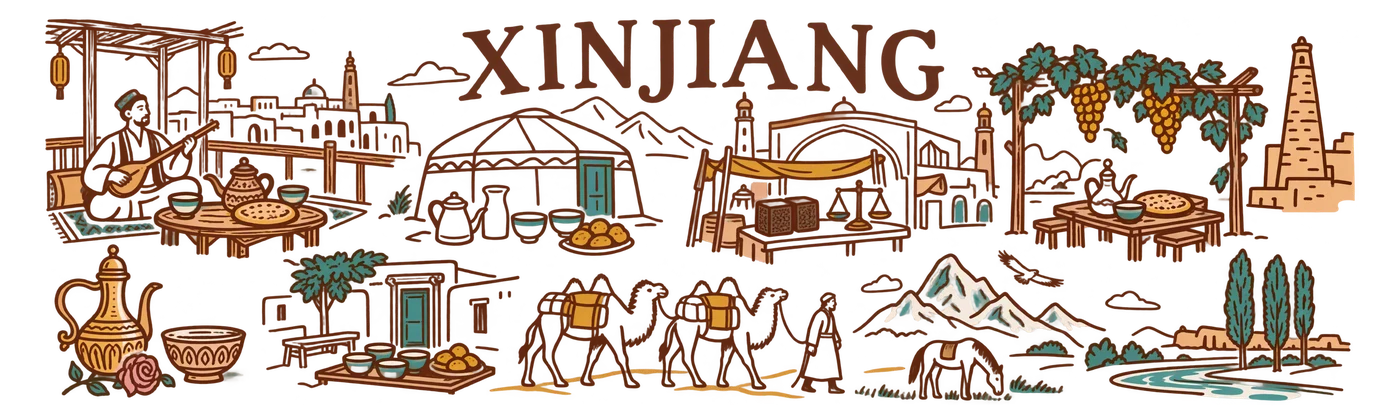
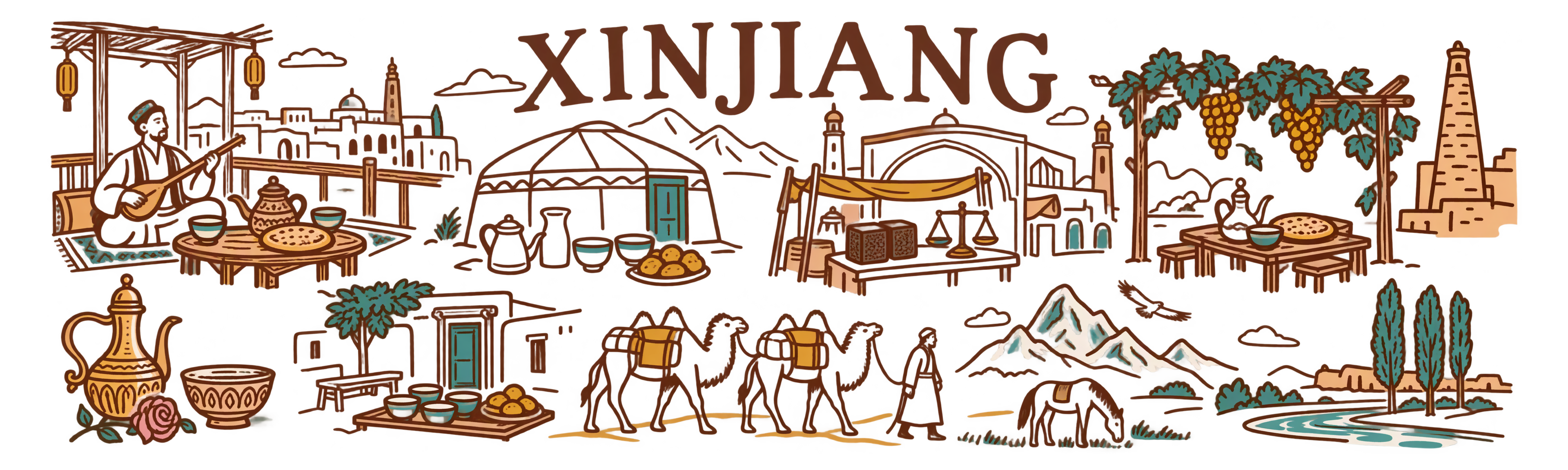
新疆通过茶叶贸易、消费外来紧压茶和待客之道得以展现。喀什、伊犁、乌鲁木齐、吐鲁番、和田与塔城提供了六种不同的社会或器物语境。这里不是茶园。
奶茶和包尔萨克不同于茶馆的叶茶。和田的玫瑰和浸泡壶将花草茶作为独立类别标示。商队是交流的艺术形象;不声称具体茶运的准确日期或路线。
毡房、茶楼阳台和双峰骆驼构成大型视觉锚点。地图呈现山脉、马、鹰、水域和杨树;宗教建筑与茶楼分开。塔城由研究补充,而非解读为原图标注。
图名与图语
任务中只规定了一个词——XINJIANG,用大号带衬线的拉丁字母。小地名、中文文本、数字和第三方标志均被排除。这是任务描述;实际可读性另行评估。
原始构思的情节清单
以下逐字列出英文作者提示中计划的组别。这是对选题的透明解释,而非承诺生成器复现了每个细节。
1。喀什:一个宽敞的开放式茶馆阳台,带有几根木柱。下方:一张矮茶桌、茶壶、两只茶碗和一块馕。旁边坐着一位手持长颈乐器的小型乐师。没有繁复的花格;这是一座世俗茶馆,而非清真寺。
2。ILI:一个大型圆形蒙古包,轮廓内部透明。外部:水壶、小奶壶、两个无柄奶茶碗和三块包尔萨克。一处绿松石门点缀。无奶油色毛毡填充。
3。URUMQI:一个简单的巴扎拱门,柜台上有两块无字的矩形压制茶砖和一个小天平。传入的茶贸易,不是当地种植。
4。吐鲁番:两根立柱与疏朗的葡萄藤架荫蔽着一张矮茶桌,桌上置壶、碗与馕。仅两串葡萄与少量叶片;藤架下空气通透。
5。和田:一个开放式线条的铜制冲泡壶,一个以三笔短痕标示的雕花木碗,以及一小枝玫瑰。花草冲泡与叶茶不同;不涉及健康功效。
6。塔城:一个低矮的小院门,一条长凳和一碗奶茶与包尔萨克。比蒙古包更安静、更小;无虚构的店铺招牌。
7。商队:两匹双峰骆驼,每匹清晰双峰、四条独立腿、简单捆扎行囊和一名步行向导。身体不填充;仅赭色鞍座点缀和两条短沙丘曲线。
8。山脉:三座雪峰、一匹吃草的马和一只小鹰的紧凑轮廓。雪与天空透明;无绘制山景全景。
9。OASIS:三棵细长的杨树,旁边是两条短河曲和一小点绿松石色水景。仅此一组;不要用重复的树木或湖泊作为填充。
10。土质遗产:一座锥形吐鲁番式宣礼塔,旁边是低矮的土坯墙,轮廓简洁,只有几处大块砖痕。没有密集的建筑纹理。
绘制方法与风格参考
研究了广州、澳门、香港和珠海城市主题的真实旅行杯照片。从中提取了观察到的图案特征:中等生动的手绘轮廓、简单可识别的剪影、选择性平面色彩点缀和顶部带状大标题。具体查看的角度组合因地区而异。
当地场景在尺度、形态和高度上各不相同。它们的并置形成整体节奏;不设定连续全景、统一地平线、相同模块网格或固定留白比例。轮廓之间与内部保持通透。
陶瓷表面、高光、手和照片中的物体背景不属于新绘图。参考图像和个人原始照片不在此发布。每个地区的三种颜色是作者调色板,而非所拍摄茶杯的实测涂料标准。
审核依据
重新审视root并独立评估台湾第二版:完整的新疆,开放清晰的轮廓,茶具、贸易场景、毡房、葡萄、白杨和两头双峰驼。消除了最初的绘画式朦胧感。
PNG RGBA 3840 × 1152 像素;真实alpha通道;按比例导出为250 × 75 毫米。
已审核作为额外的 C7 试点展示;不表示用户确认印量。艺术配色并非字面意义上的三色分色:玫瑰有粉色强调,个别浅色填充保留。地名不通过每个概括性的房屋或山体来识别。
创作方案配色
#714637
#D4A744
#69A9A7
原始生成提示词
文本与公开 TXT 一致。铭文与细节清单描述的是作者任务;并非 OCR,也不承诺在缺少所用参考的情况下可复现。
SHA-256: b130ad17f7ff2f9e98122f556a707051419eb24fbe6283c9a2cdba59138fa9d2
阅读完整提示
Create a flat souvenir-cup wrap of XINJIANG. Follow the TWO photos of real Guangzhou and Hong Kong cups: confident hand-drawn outlines, open unpainted interiors, small flat color accents and charming regional stories. The photos control the style. No mug, photograph, ceramic background, handle, company name or logo.

OUTPUT: RGBA PNG, native 3840 x 1280 px. Top and bottom 64 px alpha-zero; central 3840 x 1152 px is the final 250 x 75 mm artwork. Keep all marks safely inside. Empty areas and unfilled object interiors must be transparent, never white, cream or paper-colored. No background rectangle or checkerboard.

LINE FIRST. One clean, assured, slightly handmade dark-adobe contour per form, approximately 5-7 px at native size. Only THREE TO FIVE simple interior detail marks per object. Flat two-dimensional drawing like the reference cups. Large walls, animal bodies, yurt felt, mountains and pots stay mostly OPEN AND UNFILLED. Three inks only: dark adobe #714637 for contours; ochre #D4A744 and muted turquoise #69A9A7 for SMALL, sharply bounded accents: a door panel, saddle stripe, bowl rim or grape cluster. Color occupies a small part of a subject, not its whole body. Outline leaves with very few marks. No watercolor, brown wash, haze, cream fill, shading, soft edges, parchment, grain, dense hatch, crosshatching, stippled surfaces, gradients or shadows.

TEXT: exactly one large word, XINJIANG, high in the middle. Clean hand-drawn uppercase serif letters with open interiors and no texture. No other words, numbers, city names, Chinese, signatures, lettering on parcels or pseudo-writing.

TEN DISTINCT EPISODES, varied in size, easy to read at 75 mm print height:
1. KASHGAR: a large open-line teahouse balcony with a few wooden posts. Below: a low tea table, kettle, two tea bowls and one naan. A small seated musician with a long-necked instrument sits beside it. No ornate lattice; this is a secular teahouse, not a mosque.
2. ILI: one large round yurt, transparent inside its outline. Outside: kettle, small milk pitcher, two handleless milk-tea bowls and three baursak pieces. One turquoise door accent. No cream felt fill.
3. URUMQI: a simple bazaar arch over a counter with two unlettered rectangular pressed-tea bricks and a small balance. Incoming tea commerce, not local cultivation.
4. TURPAN: two posts and a loose grapevine shade a low tea table with a pot, bowl and naan. Only two grape bunches and a handful of leaves; clear air under the arbor.
5. HOTAN: an open-line copper infusion pot, a carved wooden bowl indicated with three short marks, and one tiny rose sprig. Herbal infusion is distinct from leaf tea; no health claims.
6. TACHENG: a small low courtyard doorway, one bench and a tray of milk-tea bowls and baursak. Quieter and smaller than the yurt; no invented business sign.
7. CARAVAN: two Bactrian camels, each clearly TWO-HUMPED with four separate legs, simple tied travel bundles and one walking guide. Bodies unfilled; just an ochre saddle accent and two short dune curves.
8. MOUNTAINS: a compact outline of three snowy peaks, one grazing horse and a small eagle. Snow and sky transparent; no painted mountain panorama.
9. OASIS: three slender poplars beside two short river curves and a tiny turquoise water accent. Exactly one such group; no duplicate trees or lakes as filler.
10. EARTHEN HERITAGE: one tapered Turpan-type minaret beside a low adobe wall, a spare outline with only a few large brick marks. No dense architecture texture.

The six tea settings describe hospitality, herbal infusions and imported tea. Never show Xinjiang tea plantations, tea terraces or picking farmers. The caravan is a regional trade metaphor, not an exact dated tea shipment.

Arrange ten episodes with the irregular rhythm of the actual cup photos: three larger anchors, medium architecture, smaller tea stories, different heights and generous clear channels. Use the whole strip. No even sticker grid, equal badges, panels, continuous ground or scenery backdrop. Light, crisp, simple and collectible. Stop before adding decorative detail. Deliver only transparent artwork.