湖南 / HN_C1
湖南——茶之重与芽之轻
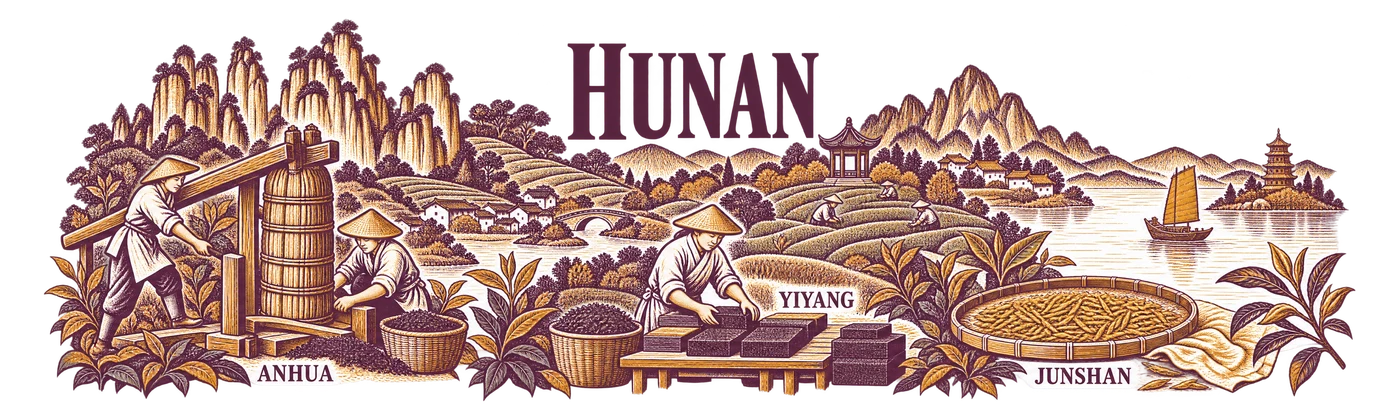
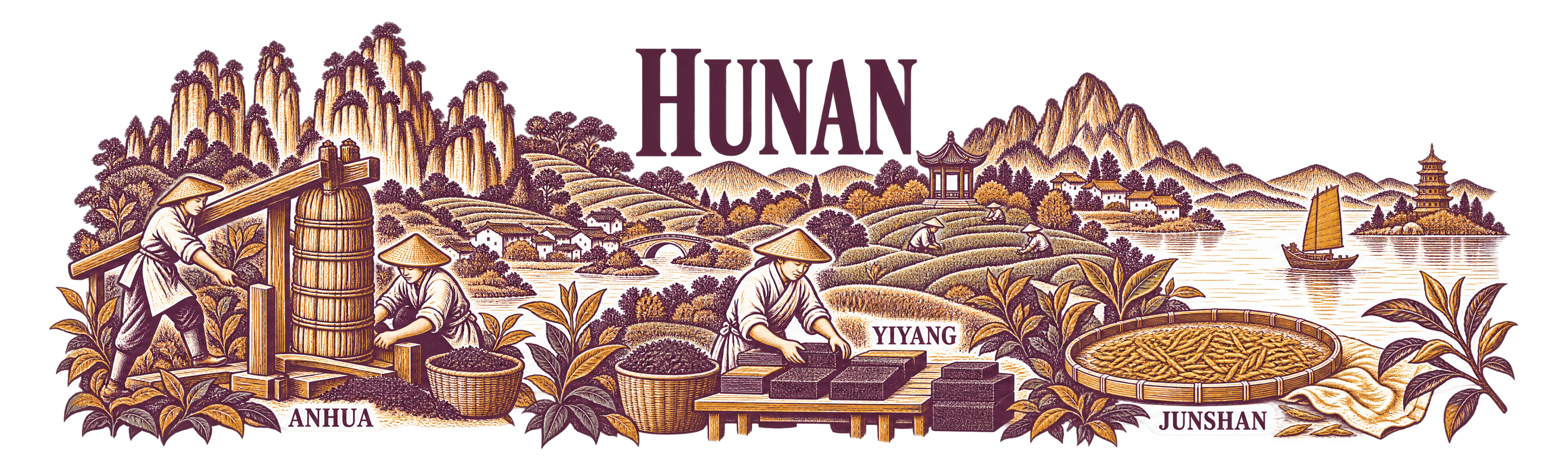
安化高圆柱与君山细嫩芽在开阔湖面上相遇。
已审核可发布 · 已查看图画并对当前文件进行技术检查
250 × 75 毫米 · 3840 × 1152 像素 · RGBA · 390.144 / 390.144 ppi
审核依据
新的紧凑构图清晰连贯:安化圆柱紧压、益阳砖茶排列和精致的君山银针茶盘保持分明。HUNAN、ANHUA、YIYANG 和 JUNSHAN 拼写正确且清晰可读。雕版双色风景线条刻意,无模糊晕染背景;轮廓完整。
PNG RGBA 3840 × 1152 像素;真实 alpha 通道;按比例导出 250 × 75 毫米。
经审阅后允许用于开放画廊;并不意味着用户认可工业化批量生产。
创作方案配色
#56354C
#CF9233
原始生成提示词
文本与公开 TXT 一致。铭文与细节清单描述的是作者任务;并非 OCR,也不承诺在缺少所用参考的情况下可复现。
SHA-256: 61176d9d75638b5459006f5de73f403fdf4d4ea6fd5bb075eb27ed9b9889fcd2
阅读完整提示
Create a new HUNAN collectible tea atlas as one exceptionally crisp two-ink engraved panorama. Flat ceramic printing artwork, not a mug. Borrow only the reference's disciplined linework, never its province, title or objects. PNG RGBA 3840 x 1280 with genuine transparent background and openings. The complete composition fits x=80..3760, y=120..1160 for the later 250 x 75 mm export. Draw every object wholly inside this area, at normal proportions. Nothing touches the canvas edge.

Use exactly plum #56354C and harvest gold #CF9233. Plum supplies decisive contours and typography; gold supplies selected solid forms and sparse clean hatch marks. The drawing should resemble a fine printed wood engraving with deliberate lines, clear silhouettes and readable faces. Unprinted areas are transparent. No photographic texture, cloudy washes, fading, shaded white underlay, gradients or grain. Reserve tiny detail for a few hero objects; do not carpet the hills in micro-patterns.

The idea is WEIGHT AND LIGHTNESS OF HUNAN TEA. Three unequal scenes connect as one inhabited landscape, with one large near-left craft action, a lower middle workshop and a quieter open right-hand lake scene. At left two Anhua tea workers use a strong slanted wooden compression lever beside a tall upright Qianliang tea cylinder wrapped in bamboo. It is compressed dark tea, not a drum. At centre a Yiyang workshop has a worker arranging clean rectangular Fuzhuan bricks on a table, plus one basket of loose dark tea. At right a large shallow bamboo tray of slender Junshan yellow-tea buds rests beside a folded yellowing cloth; behind it a low island, a sparse sail and a few line ripples evoke Dongting Lake. Never draw literal flowers growing from Fuzhuan bricks.

Keep smaller regional discoveries meaningful: western picking slopes suggest Guzhang and Baojing, a river-valley rolling bench suggests Yuanling, northern low garden rows suggest Shimen. A modest tea pavilion suggests Jinjing; southern foothills with a small roof suggest Hengshan, and two separate large fuzzy tea shoots and a picking branch suggest Rucheng and Jianghua. These are supporting details, not eleven separate labelled thumbnails. Zhangjiajie sandstone pillars at far left are scenery behind the gardens: no tea rows on vertical rock. Baojing is green tea; Junshan is yellow tea. Ordinary tea leaf and bud anatomy is precise and recognisable.

Allow a few real rooflines, leaf branches and ground contours to overlap and connect these scenes. Let clean transparent gaps separate the dense cylinder, low workbench and delicate bud tray. Main title HUNAN appears once, large, in tall elegant serif capitals in the natural opening above the central workshop. The only small captions are ANHUA below the cylinder, YIYANG beside the brick table and JUNSHAN beside the tray. Exactly these four text strings; no other place names, Chinese, numerals or ornamental pseudo-writing. No box frames, dotted networks, map silhouette, mockup, paper, sky or opaque background.