重庆 / CQ_C2
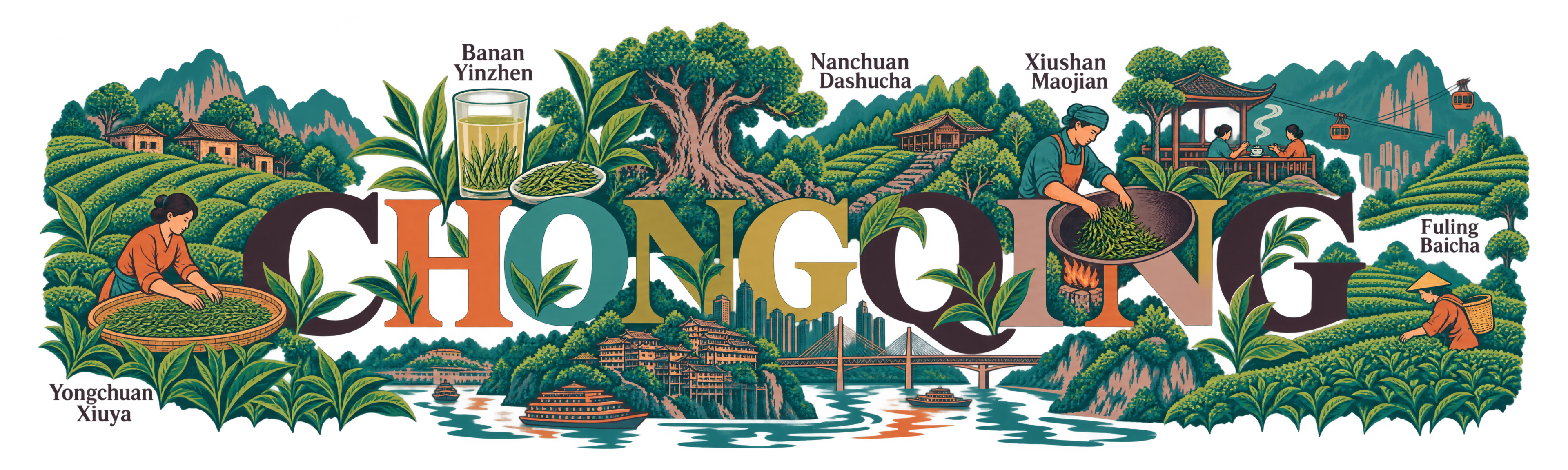
重庆 — 茶字上的城市
字母成为山地茶业的支撑。
已审核可发布 · 已查看图画并对当前文件进行技术检查
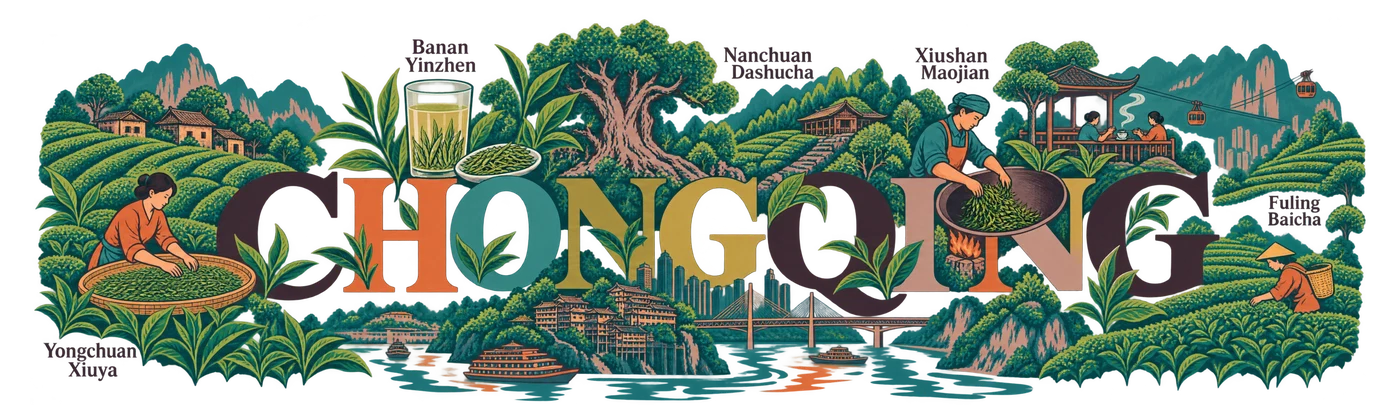
250 × 75 毫米 · 3840 × 1152 像素 · RGBA · 390.144 / 390.144 ppi
审核依据
已查看整个构图:CHONGQING 可读,五个茶标签和加工场景可辨认;连贯的图画,无矩形底衬。主要物体和字母完整。
PNG RGBA 3840 × 1152 像素;真实 alpha 通道;按比例导出 250 × 75 毫米。
经审阅后允许用于开放画廊;并不意味着用户认可工业化批量生产。
创作方案配色
#41343E
#DB633C
#3B928A
#AC963F
#C6958A
原始生成提示词
文本与公开 TXT 一致。铭文与细节清单描述的是作者任务;并非 OCR,也不承诺在缺少所用参考的情况下可复现。
SHA-256: 055666fc58caf68cfc64f2b1648cd68764256c2a0cbc55187867d48dbcd97741
阅读完整提示
Create an exceptional original flat illustration for a collectible tea-region ceramic wrap. The attached image is a STYLE reference, not a content reference: preserve its drawing intelligence, print character and relationship between title, scenes and empty glaze; replace every Guangdong-specific subject and word. Output one panoramic native 3840 x 1280 pixel PNG with a genuine RGBA alpha channel. All artwork, including lettering, must remain wholly inside x60..3780 and y110..1170. The upper and lower outside bands and the external negative space must be transparent, not white paint. The final production crop will be 3840 x 1152 pixels for a 250 x 75 mm wrap; do not draw dimensions, crop marks or a frame. No mug, mockup, photograph, simulated paper, decorative rectangular background, cast shadow, checkerboard or watermark.

DRAWING AND PRINT DISCIPLINE: Use confident authored linework, recognisable local silhouettes, selective flat colour and well-resolved hands, vessels and architecture. Details reward close looking but the main story reads across a small ceramic surface. Colour belongs to actual drawn objects or deliberate bounded accents. Transparent sky, river openings, architectural gaps and open vessel interiors are part of the design. Do not use a continuous opaque landscape base, atmosphere wash, cream substrate or enormous filled silhouette behind everything. Keep deliberate pauses between major masses without making a sticker sheet. Never cut off a letter, roof, person, handle or tree at the image boundary. Do not scatter repeated generic teapots as filler. Each featured tea action must communicate a different part of the region's tea story. This is an illustrated interpretation, not a navigable map: no compass, coordinate grid, dotted connectors, numbered pins, legend or tiny labels.

COLLECTION C2 — GRAND TEA LETTERING.
Five-colour hand-drawn grand serif lettering integrated with a connected regional tea world. The large single region word is the unmistakable structural hero, fully readable with clean counters and open interiors. Put real scenes around the letter feet, in the intervals and behind selected edges. Do NOT fill the letters with photographs or landscape textures, disguise letters as mountains, or cover their skeleton. A branch, roof or working hand may cross one small edge. The letter rhythm binds varied human-scale discoveries into one authored composition.

REGION: CHONGQING. EXACT PALETTE: #41343E, #DB633C, #3B928A, #AC963F, #C6958A. Use only these opaque graphic inks and their clean antialiased edges; no white ink, black substitution or extra colours. Transparent negative space is not an additional ink.

Build a large graceful CHONGQING across the central height, with the two G counters perfectly open. Across the letter feet rises a stepped tea-producing landscape: Yongchuan needle-leaf sorting on a shallow woven tray at the first C; a close Banan infusion glass and loose needles near H/O; a Nanchuan old tea trunk threading behind N/G; a Xiushan hand-firing worker visible between the last letter groups; Fuling rows climbing into a small rear ridge. Above the final G a tiny open gaiwan terrace and a cable-stayed bridge establish the mountain city's scale. The letters themselves use clear untextured graphic colour, never photographic scenery fills.

REGIONAL TRUTH: Yongchuan Xiuya is a needle-shaped green tea. Banan Yinzhen, Xiushan Maojian and Fuling Baicha are documented regional tea names; do not infer white-tea processing merely from the name Baicha. Nanchuan has Dashucha trees and Jinfo Mountain tea traditions. Xiushan Maojian is made in the Wuling Mountains, including hand pan-firing. Show Chongqing as both a producing region and a city of gaiwan hospitality. Tea terraces belong to these rural districts, not to downtown towers. The Yangtze and Jialing confluence and local stepped riverside architecture identify the municipality. Do not depict Xiling Gorge or Badong as Chongqing sites.

SPECIFIC COMPOSITION: The word is the main continuous architectural structure. The tree rises behind its middle, the firing station projects in front at right and the sorting tray projects left; these intentional overlaps make one scene. Keep hands and pan unobscured. Jialing/Yangtze is suggested by two narrow open contours below, not an opaque scenic base. Colour accents distinguish craft stages rather than giving each letter a rainbow gradient.

TEXT: Main title exactly "CHONGQING". Secondary labels, each once and attached to its correct scene: Yongchuan Xiuya; Banan Yinzhen; Nanchuan Dashucha; Xiushan Maojian; Fuling Baicha. No other text.

FINAL ART DIRECTION: Make every major group different in scale and gesture. Do not give every scene a surrounding halo or a separate base. A viewer should discover a clear regional idea at arm's length and then human actions, leaf shapes and local building features nearby. Keep the specified palette visible as actual graphic inks, not merely a tint over green scenery. Do not add unrequested slogans, stamps, logos, dates, Chinese characters or gibberish. The exact allowed English words below are the entire text vocabulary. Keep secondary words comfortably readable if allowed; omit a minor caption rather than shrinking it to microscopic lettering. Render the regional title exactly once and complete, with comfortable space around it. No extra title repeated on vessels or buildings. Draw a finished cohesive piece of print art, never a presentation board.