Чжэцзян / ZJ_C3
Zhejiang — Один чайный путь, разные воды
Связная карта различает озеро, каналы, южные долины и островной чай.
Проверено для публикации · Просмотр рисунка и техническая проверка текущего файла
Региональное исследование и источники
Основание проверки
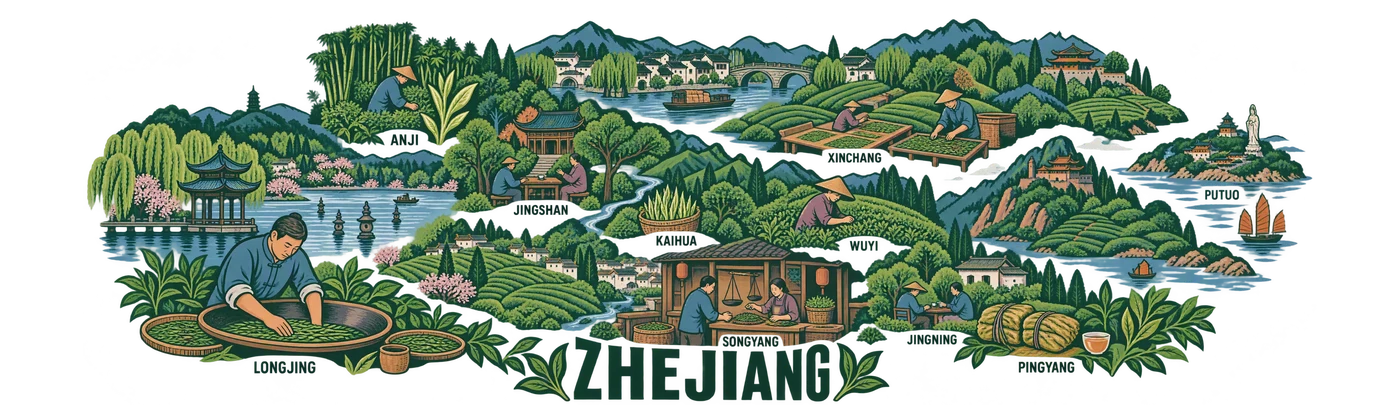
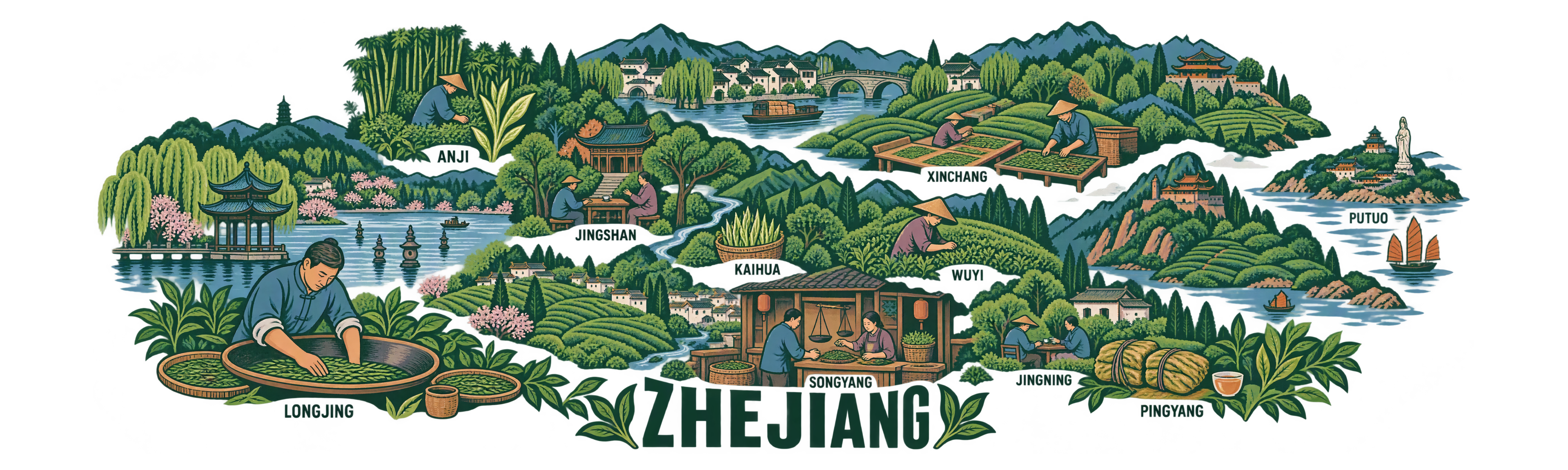
Связная графическая чайная территория: читаемое ZHEJIANG, крупная обработка Longjing, бамбук Anji, сцены Jingshan и Songyang, отдельный Pingyang. Просветы естественные, края целые.
PNG RGBA 3840 × 1152 px; настоящий альфа-канал; пропорциональный экспорт 250 × 75 мм.
Допущен после просмотра для открытой галереи; не означает утверждение пользователем промышленного тиража.
Палитра авторского задания
#345C47
#688C9E
#9BA958
#C48C61
#A47890
Точное текстовое задание
Текст совпадает с публичным TXT. Перечень надписей и деталей описывает авторское задание; это не OCR и не обещание воспроизводимости без использованных референсов.
SHA-256: 79804c22d843844b8e2629e63dab22c28301ddbd870d4f058e410103e8212b5d
Прочитать полный промпт
Create an original collectible regional ceramic PRINTING DECAL, not a mug or mockup. The supplied image is a drawing/style benchmark only: replace every reference-region subject and word with the researched region described below. Make a confident, rewarding composition whose tea craft, architecture and landscape belong together.
OUTPUT: PNG RGBA, native 3840 x 1280 px. Keep every mark inside x=60..3780 and y=110..1170; use nearly the whole long strip. The final export is 3840 x 1152 px for 250 x 75 mm. Do not shrink the entire design to a central 16:9 picture. Preserve normal object proportions and complete edge objects.
ALPHA: genuine transparent exterior and natural transparent openings inside the drawing. No white or cream rectangle, paper texture, sky wash, sea fill, provincial silhouette, checkerboard, aura, gradient or drop shadow. Unpainted architecture, water and negative openings reveal alpha. Colour belongs to actual drawn objects, never a vague backdrop. Do not reproduce any opaque field visible in the reference.
For C1–C6, create ONE connected varied panorama with two or three unequal anchors, overlapping near/middle/far scales and smaller discoveries. Connect through real terrain, streets, roofs, branches and human actions, not dotted diagram routes. No two-row sticker sheet, isolated equal scenes, caption boxes, repetitive generic gardens or an empty band under the title. Do not impose a percentage of blank space. C7 instead follows its explicit irregular album direction below.
English lettering only, exact spelling, dark clear capitals for allowed captions. One main regional title. No Chinese characters, logos, invented seals, pseudo-writing, promotional superlatives or health claims. A short legible caption is preferable to microscopic text. Respect the stated distinctions between growing tea, processing it, trading it and serving it. A full research inventory need not become a printed gazetteer.

COLLECTION: ONE LIVING TEA TERRITORY. Follow GD18: connected editorial tea geography with a broad change in scale. A foreground craft episode leads through connected slopes and settlement contours into far terrain. Use five-colour accents, intentional fine drawing and a strong condensed regional title integrated low in the composition. Never fill an administrative silhouette or make equal garden badges.
REGION: ZHEJIANG.
PALETTE: #345C47, #688C9E, #9BA958, #C48C61, #A47890. Preserve this regional colour family; first colour supplies the strongest contour/text. Extra dark/light rendering colours and full-colour watercolour are not wanted.
RESEARCHED CONTENT:
Build the region around clearly differentiated tea craft. Hangzhou/West Lake Longjing: a master presses flat tea leaves against a shallow wok, with low terraced slopes and a lakeside pavilion farther behind. Jingshan: a modest temple-side tea table and nearby growing slope, a separate northern Hangzhou tradition. Anji: a pale open tea shoot alongside slender bamboo stems; show green-tea processing, not white-tea withering. Xinchang and Shengzhou: southern Longjing terraces and a distinct flat-leaf sorting board, not another name for West Lake. Kaihua Longding: upright slim buds and a small inland hillside basket. Wuyi/Wuyang Chunyu: a hand selecting tender leaves beside low rain-fed hills. Songyang: curved gardens lead to a real tea-market counter with weighing scale and leaf baskets; tea is both grown and traded here. Jingning/Huiming: an upland garden and modest shared tea table, without invented ethnic costume. Tiantai: mountain tea below a temple roof. Pingyang Huangtang: a wrapped yellowing bundle beside a small amber cup, clearly a processing story separate from Anji. Zhoushan/Putuo: a tiny island tea plot behind a low temple eave, with just open sea strokes. Northern lake/canal terrain, western hills, southern valleys and offshore islands must remain distinct; do not put every tea garden on one lake.
AUTHORED COMPOSITION:
Lead from foreground Hangzhou wok craft upward into West Lake and Anji bamboo at the left. The Grand Canal is a thin open northern branch, while tea-bearing western hills descend diagonally through Kaihua, Wuyi and Songyang to Jingning and Pingyang in the lower right. Place Xinchang/Shengzhou and Tiantai as separate middle-slope workspaces. Offshore Putuo is a low island shoulder beside a distant sail, separated by clear alpha water rather than a filled sea. A Songyang trader weighs tea in the nearest southern room; this foreground scene contrasts with tiny northern roofs. Set ZHEJIANG within the lower rim of the geography, maintaining the distinction between cultivated ground and waterways.
LETTERING PLAN:
Main title ZHEJIANG once. Tea captions only: LONGJING, ANJI, JINGSHAN, XINCHANG, KAIHUA, WUYI, SONGYANG, JINGNING, PINGYANG, PUTUO. Unlabelled Shengzhou/Tiantai episodes remain content, not added microtext.
REGIONAL SAFEGUARDS:
Anji Baicha is green tea, not the white-tea processing category. Longjing is flattened tea, not spherical pellets. Pingyang yellow tea has a wrapping/yellowing craft cue; do not colour every tea yellow. Oil-tea camellia is excluded. Keep northern lake/canal, southern Ou River and sea islands distinct. No invented heights, imperial stories, medical claims or unidentified monuments given precise names.
FINAL STANDARD: sharply drawn object edges, deliberate line hierarchy, vivid meaningful local differences and a recognisable whole place. Protect the main title and key silhouettes; never solve complexity by making everything equally tiny.