Jiangxi / JX_C6
Jiangxi — Along the river from leaf to cup
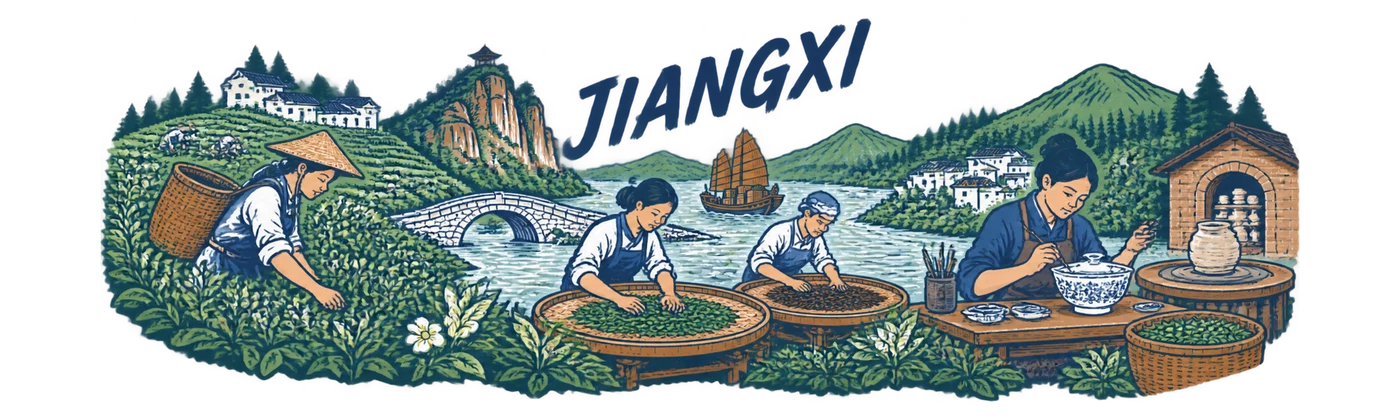
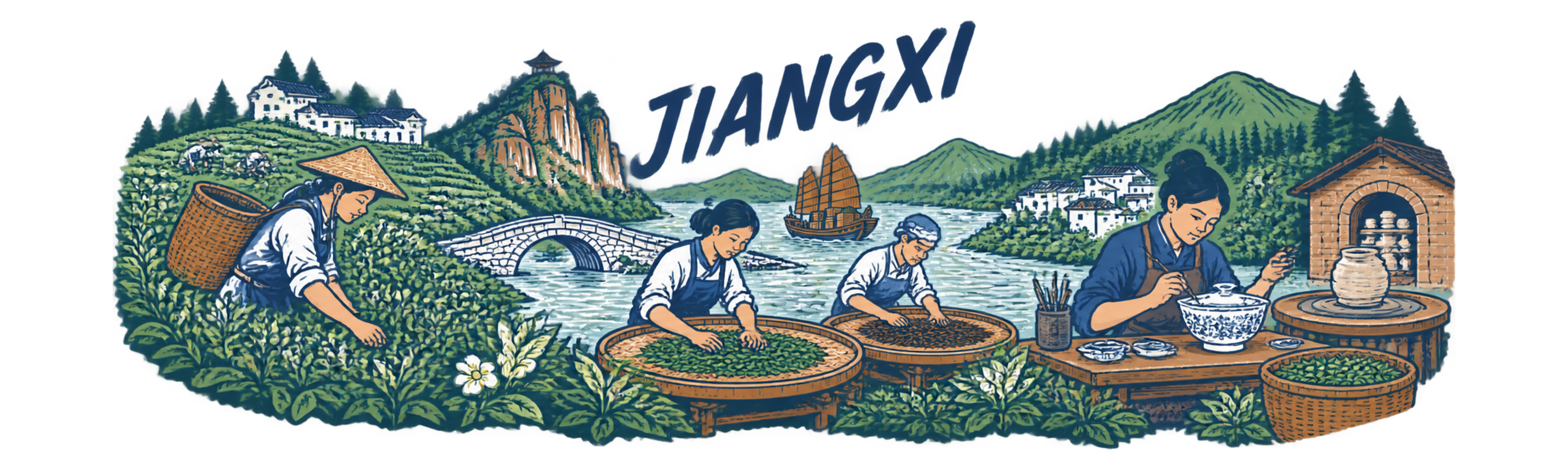
One energetic arc links tea picking, the old bridge, the boat and pottery work.
Checked for publication · Drawing review and technical check of the current file
Review basis
Recomposed as three readable craft actions linked by river and bridge. Clear Jiangxi title, tea handling and porcelain decoration distinct, no malformed small labels, contours and silhouettes suitable for gallery.
PNG RGBA 3840 × 1152 px; real alpha channel; proportional export 250 × 75 mm.
Approved after review for the open gallery; does not imply the user's endorsement of industrial production.
Creative brief palette
#2F457B
#B57241
#759383
Original generation prompt
Text matches the public TXT. The list of inscriptions and details describes the author's brief; this is not OCR and not a promise of reproducibility without the references used.
SHA-256: 9ac4e00282f3609a3bee8b621ab0ede247599b0a6b86f3a7e1152c57d483fe0b
Read the full prompt
Design one premium JIANGXI collectible travel-and-tea illustration. Flat printable wrap, native PNG RGBA 3840x1280, true transparent background. Keep the entire illustration safely within x80..3760 y120..1160. Use the reference only for energetic drawing style; every subject and title must belong to Jiangxi. No mug or scene mockup.

Use exactly three inks: deep indigo #2F457B, warm clay #B57241 and celadon #759383. An assertive hand-carved editorial illustration: broad confident contours, flat selected colours and clean fine hatch accents. Sharp architectural silhouettes, clear expressive people, sophisticated rhythmic composition. No grunge, grain, soft photographic textures, hazy mountain fill or dense microscopic stippling. Blank areas are transparent. The only text anywhere is JIANGXI, once in large vigorous leaning capitals above the central river. No small captions, numbers, signs, Chinese characters or pseudo-writing.

The story is one journey from growing leaf to porcelain cup. Three large unequal scenes connected by a sweeping river line and an old single-span stone bridge. At left, a Wuyuan tea picker leans diagonally into a row of lush but simply drawn Camellia sinensis, carrying a large wicker basket. White-wall, dark-roof village buildings are represented by a small clear cluster of three rooflines, not fifty tiny houses. At centre, two artisans roll green leaves on a low bamboo tray and spread darker Ninghong leaves on a separate broad drying tray. Behind them, one small cargo sailboat suggests Poyang Lake and tea distribution. On the right, a Jingdezhen potter decorates a large blue-and-white gaiwan at a broad workbench, beside a potter's wheel and a simple brick ceramic kiln. Make it unmistakably pottery production, not a tea-drying furnace. Show the beautiful empty space inside the bowl and the graceful hand applying its decoration.

A few meaningful supporting discoveries enrich this linked scene without clutter: one steep Lushan ridge and little pavilion above the river; a Fuliang leaf basket near the pottery table; Suichuan and Shangrao picking slopes at the left; one unusually pale new tea shoot suggesting Zixi/Jing'an; wooded southern hills suggesting Jinggangshan/Shangyou. The pale leaf represents a green tea cultivar, not automatically processed white tea. All regional references can be pictorial, without labels.

The river and bridge create motion through three big actions, not a strip of equal stickers. Tea basket, rolling tray and porcelain bowl are memorable hero shapes. Preserve open transparent intervals around their silhouettes and the skyline. Rich enough to discover details, simple enough to remain confident at 75mm high. No map outline, border, poster rectangle, white backing, paper, sky fill, mist or full-bleed background. Every rendered edge intentional and crisp.